

How Horses Learn Through Repetition
Understanding how horses learn is at the heart of effective training. Whether you’re working on basic flatwork, jumping lines or more advanced dressage movements, repetition is the cornerstone of how horses build confidence and trust in their rider.
Getting the most from that repetition, however, depends on far more than simply practising the same movement over and over, it starts with the ground beneath their hooves.
Why Do Horses Learn Better Through Repetition?
Horses are creatures of habit by nature. In the wild, their survival depends on recognising patterns, whether this be familiar routes, safe water sources or predictable herd behaviour. This same instinct makes them remarkably receptive to structured, repetitive training. Each time a horse repeats a movement and is rewarded, the brain reinforces that response. Over time, it becomes faster and more natural.
This process means horses don’t simply memorise commands, they develop physical and mental fluency. A young horse learning to leg yield may initially feel unbalanced and uncertain, but with consistent, calm repetition across regular schooling sessions, the movement gradually becomes second nature.
What Types of Learning Do Horses Use?
Horses learn in several different ways and understanding these can make you a more effective trainer.
The first is habituation. This is when a horse gets used to something through repeated exposure and stops reacting to it. A good example is a horse that is nervous around clippers. With calm, repeated introduction, their reaction fades over time. The opposite of this is sensitisation, where repeated exposure actually increases a response. This is useful in training too, such as teaching a horse to respond to lighter and lighter leg aids.
Positive reinforcement is when you give a horse something they enjoy, like a treat or a scratch, when they do something right. This makes them more likely to repeat that behaviour.
The key with all of these is consistency. Repeating the same cues, in the same environment, with the same outcomes, is what makes training stick.
Why Is Consistency So Important in Horse Training?
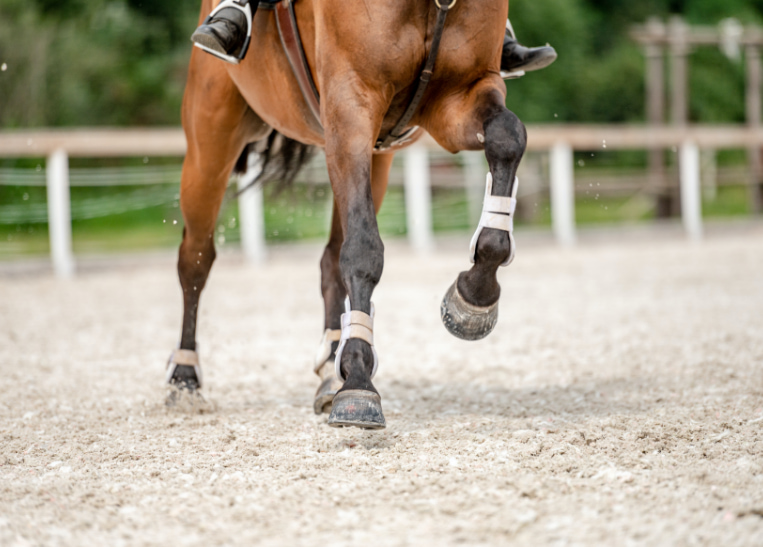
Repetition only works if everything stays consistent, including the surface your horse works on. Unpredictable footing can confuse a horse and slow progress. If the surface shifts, sits too deep or gets waterlogged, your horse has to focus on staying balanced rather than listening to your aids. That makes learning much harder.
This is why investing in a quality arena surface isn’t just about comfort, it’s a direct investment in your horse’s training. At Combi-Ride, our stabiliser fibre systems are specifically engineered to deliver even, reliable footing across the entire arena, session after session. We offer a range of arena surfaces, including:
With over 40 years of experience in the equestrian world and more than 2,000 arena surfaces installed across the UK, we know how much the surface beneath your horse affects everything that happens above it.
How Does Arena Surfacing Affect How Quickly a Horse Learns?
Good footing removes a big variable from training. When the surface is stable, well-drained and consistent, your horse can move freely and focus on what you’re asking. Your aids become clearer, your sessions more productive and progress comes faster.
Combi-Ride’s range of surfaces, including our Dual-Stabiliser Fibre and Combi-Pro Advanced Fibre blends, are designed to provide exactly that. Excellent grip, effective shock absorption and reliable drainage in all weathers, because good training shouldn’t stop when the seasons change.
What Is the Best Environment for Training a Horse?
Repetition in horse training isn’t about mindless drilling, it’s about thoughtful, structured practice carried out in the right conditions. Pair a clear training plan with an arena surface that performs reliably day in, day out and you give your horse the very best environment to learn, develop and thrive.
Get in touch with the Combi-Ride team today for a free, no-obligation quote and find out how the right surface can support your horse’s training.