

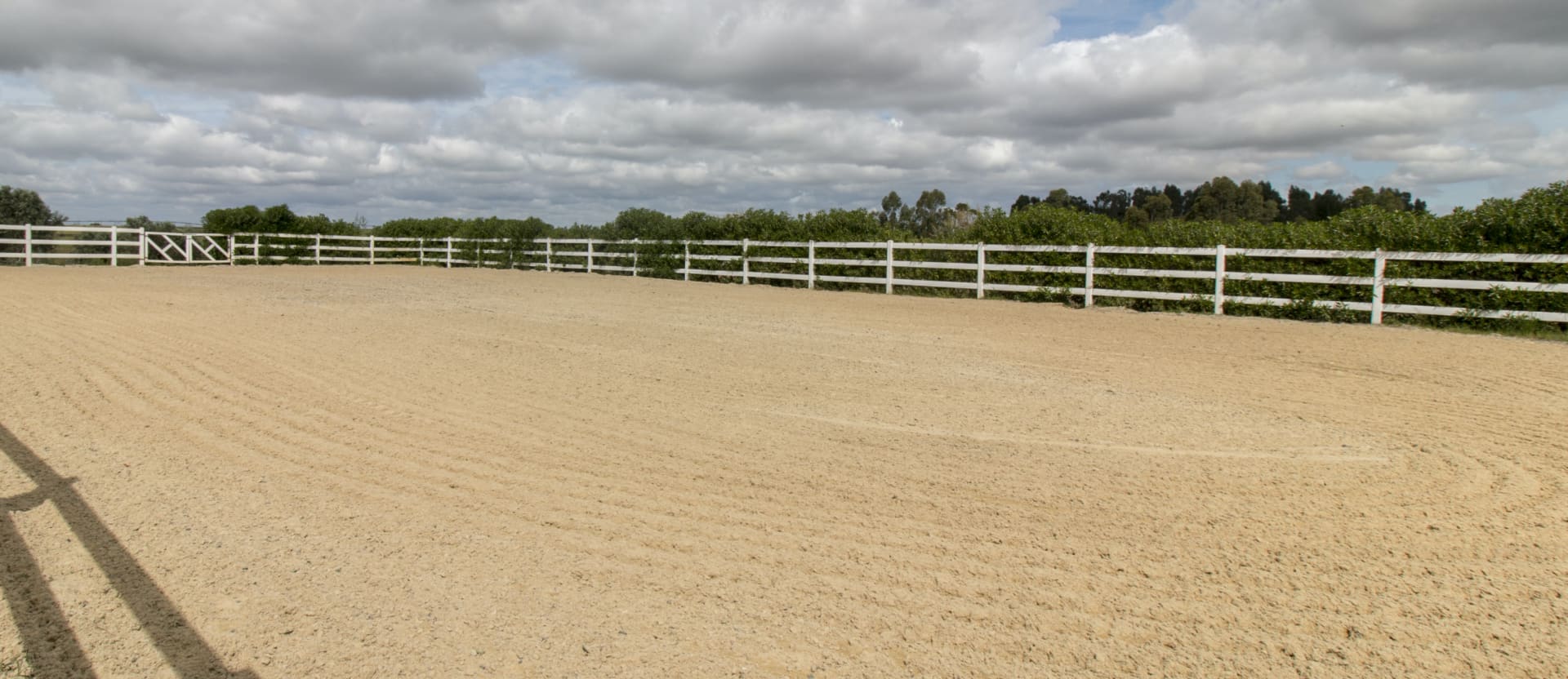
Equestrian Arenas
With over 20 years of experience, Combi-Ride are experts in fixing your existing equestrian arena problems and improving their quality and performance.
-
 Competitive Prices
 -
 Over 20 Years Experience
 -
 Nationwide Delivery
Equestrian Arenas
This page covers everything you need to know about equestrian arena types, surface options and what to consider when planning your installation, whether you’re building new or rejuvenating an existing surface.
At Combi-Ride, we are a long-established, trusted supplier and installer of high-quality equestrian arenas and surfaces, with over 20 years of experience across the UK. Our journey began at Askham Bryan College, where we built the technical foundation needed to truly understand what goes into an exceptional equestrian surface.
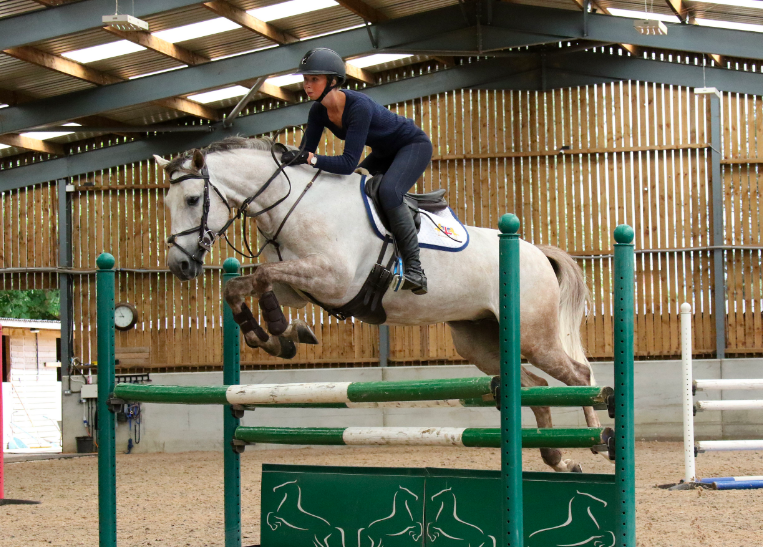
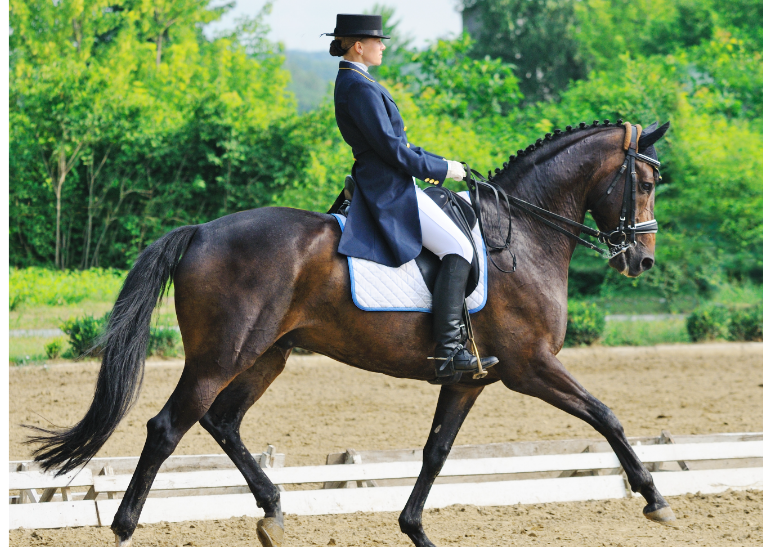
Whether you are a professional rider, a competition yard or a happy hacker looking for a safe, reliable space to ride, we offer a range of surfaces suitable for all disciplines including dressage, show jumping and gallops.
Install Now
Why Choose Combi-Ride?
Formally trained: Our expertise is grounded in technical education from Askham Bryan College, one of the UK’s leading land-based colleges.
UK-wide installation: We work with clients across the entire UK, from private estates to competition yards and livery facilities.
Ongoing maintenance support: Our relationship doesn’t end at installation. We provide expert guidance on surface care, additives and rejuvenation.
Horse welfare first: Every surface recommendation considers your horse’s joints, tendons and long-term physical wellbeing.
Horse Riding Arena
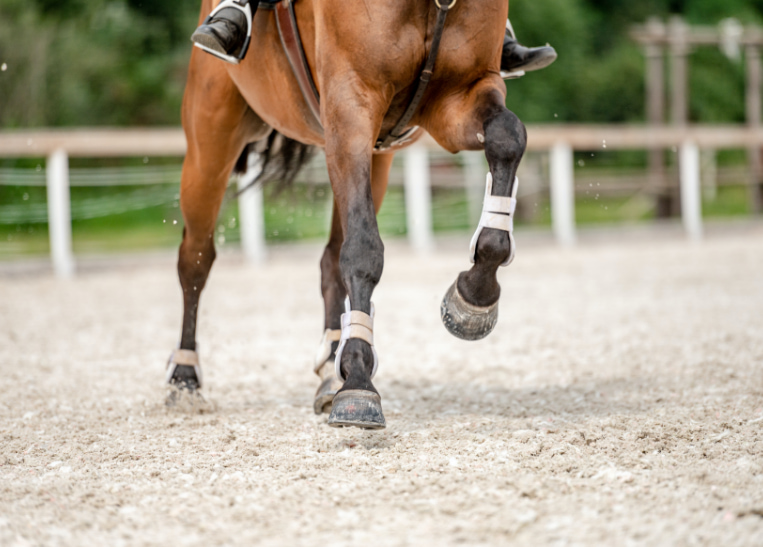
Performance and soundness is key to horses whether they are used for sport, work or leisure. A well-specified horse riding arena does more than provide somewhere to ride, it actively supports your horse’s movement, reduces injury risk and helps both horse and rider perform at their best.
Supports joint & tendon health
A well-specified surface absorbs and distributes impact forces that would otherwise travel through your horse’s legs. This is especially critical for landing after jumps and during collected dressage work.
Improves consistency of training
A predictable, uniform surface allows your horse to move with confidence, translating directly to more effective schooling sessions and better competition performance.
Reduces injury & recovery time
Horses ridden on inappropriate or poorly maintained surfaces are at higher risk of soft tissue injuries. Our surfaces are designed to minimise this risk across all gaits and disciplines.
Our arenas are sustainable and enduring. With proper installation and our expert maintenance advice, surfaces are designed to last and where needed, we supply rejuvenation additives to extend their lifespan further. Our experience spans over 20 years across the whole of the UK.
Surface Options For Outdoor Arenas:
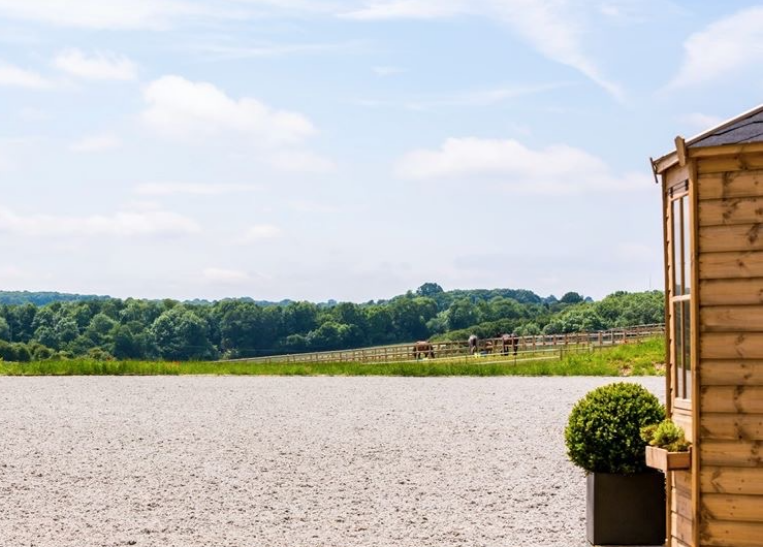
Silica sand: The most widely used base. High hardness, low maintenance, performs year-round. Typically laid at 5–6 inches depth, well compacted, and combined with quality stabiliser additives suited to your discipline.
Fibre & sand: Synthetic fibre mixed with sand provides additional cushioning, improved moisture retention and better dust suppression.
Rubber chippings: Used for many years as a riding surface on top of equestrian silica sand. Now mainly used to top up existing sand and rubber surfaces and to aid with frost protection alongside Combi-ride stabiliser fibre.
Our Dual stabiliser fibre has a small rubber fleck added to give response without the need to add a large rubber chip.
Compatible disciplines:
- Dressage
- Show jumping
- Eventing
- Gallops & canter tracks
- Hacking & leisure
Indoor Horse Arena
Having an effective and durable indoor surface fitted will mean that you can ride your horse no matter the weather, all year round. An indoor arena is one of the most valuable investments you can make for consistent, uninterrupted training.
Year-round rideability
Eliminate lost training days caused by frozen ground, waterlogged surfaces or poor visibility. An indoor arena gives you a controlled environment 365 days a year, which is invaluable for competition preparation or keeping horses in consistent work through winter.
Better for sensitive or recovering horses
Horses with joint issues, respiratory sensitivities or those returning from injury benefit enormously from the controlled, dust-managed environment of a quality indoor surface. Our wax and fibre options are particularly well-suited to these needs.
Reduced watering requirements
Indoor arenas don’t contend with evaporation from direct sunlight or wind, meaning your surface holds moisture better with less intervention.
Ideal for serious training & competition prep
When competition season matters, you can’t afford gaps in your training. An indoor arena means uninterrupted preparation, regardless of the season or the British climate’s best efforts.
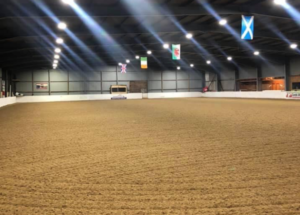
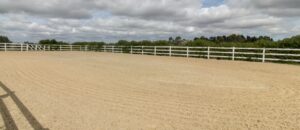
Surface Options For Indoor Arenas:
Combi-Ride has an impressive selection of indoor horse arena surface types to suit every yard and budget:
Silica sand: On its own is not recommended as a riding surface Adding Combi-Ride stabiliser fibre will create a stable surface to ride on.
Fibre Additive: Excellent cushioning and dust suppression, popular for dressage and horses with respiratory sensitivity. At Combi-Ride, we offer both Dual Stabiliser Fibre or our Combi-Pro Advanced Fibre.
Combi-Wax: Our premium indoor surface, developed exclusively for us by one of the world’s leading equestrian wax companies. The wax-based emulsion stays structured within the surface to significantly reduce watering needs, maintain consistent footing and suppress dust, with far less day-to-day maintenance than traditional surfaces.

Get in touch today
to get your free quote
FAQs
-
What kind of sand can be used for equestrian arenas?
Equestrian-grade washed silica sand is the industry standard, commonly used due to its impressive levels of hardness and low maintenance. It is also a surface that can perform all year round, regardless of weather conditions or frequency of use. Avoid building or landscaping sand as it will compact, retain water and cause uneven footing.
-
How deep should sand be in your equestrian arena?
Sand on its own can ride deep and be harmful to horse tendons, especially when landing. The most commonly used equestrian arena surface is washed and processed silica sand, laid to a depth of approximately 5–6 inches, well compacted and combined with other good quality stabiliser additives according to the intended equestrian discipline.
-
How often does an arena surface need to be maintained?
Regular harrowing is essential, how often depends on frequency of use and your surface type. For most private yards, harrowing every 2–3 days of use helps maintain even footing and prevents compaction, depending on weather conditions. We provide full maintenance guidance with every installation.
-
Can I rejuvenate my existing arena instead of replacing it?
In many cases, yes. If your arena’s sub-base is still structurally sound, targeted surface treatments can transform the riding quality without the cost of full replacement. Whether you require a surface additive to rejuvenate your equestrian surface or have a drainage problem that needs addressing, we can help.
-
What size indoor arena do I need?
Standard dressage arenas are either 20m x 40m (small) or 20m x 60m (full size, required for FEI-level tests). For jumping and general schooling, a 40m x 20m or larger rectangle works well for most disciplines. We’ll talk through your requirements during consultation and help you plan around your specific land and budget constraints.
-
What's the difference between indoor and outdoor arena surfaces?
Outdoor surfaces must handle the full range of British weather, drainage performance is critical and the surface must remain rideable in both wet winters and dry summers. Indoor surfaces don’t need the same weather resistance, but do need good dust suppression, consistent moisture retention and excellent footing stability for daily use. Our Combi-Wax surface is specifically well-suited to indoor environments for these reasons.
-
Does Combi-Ride cover my area?
Yes. At Combi-Ride, we offer our expertise throughout the whole of the UK. Whether you’re in the south of England, Scotland, Wales or anywhere in between, we can arrange a site visit and consultation.