

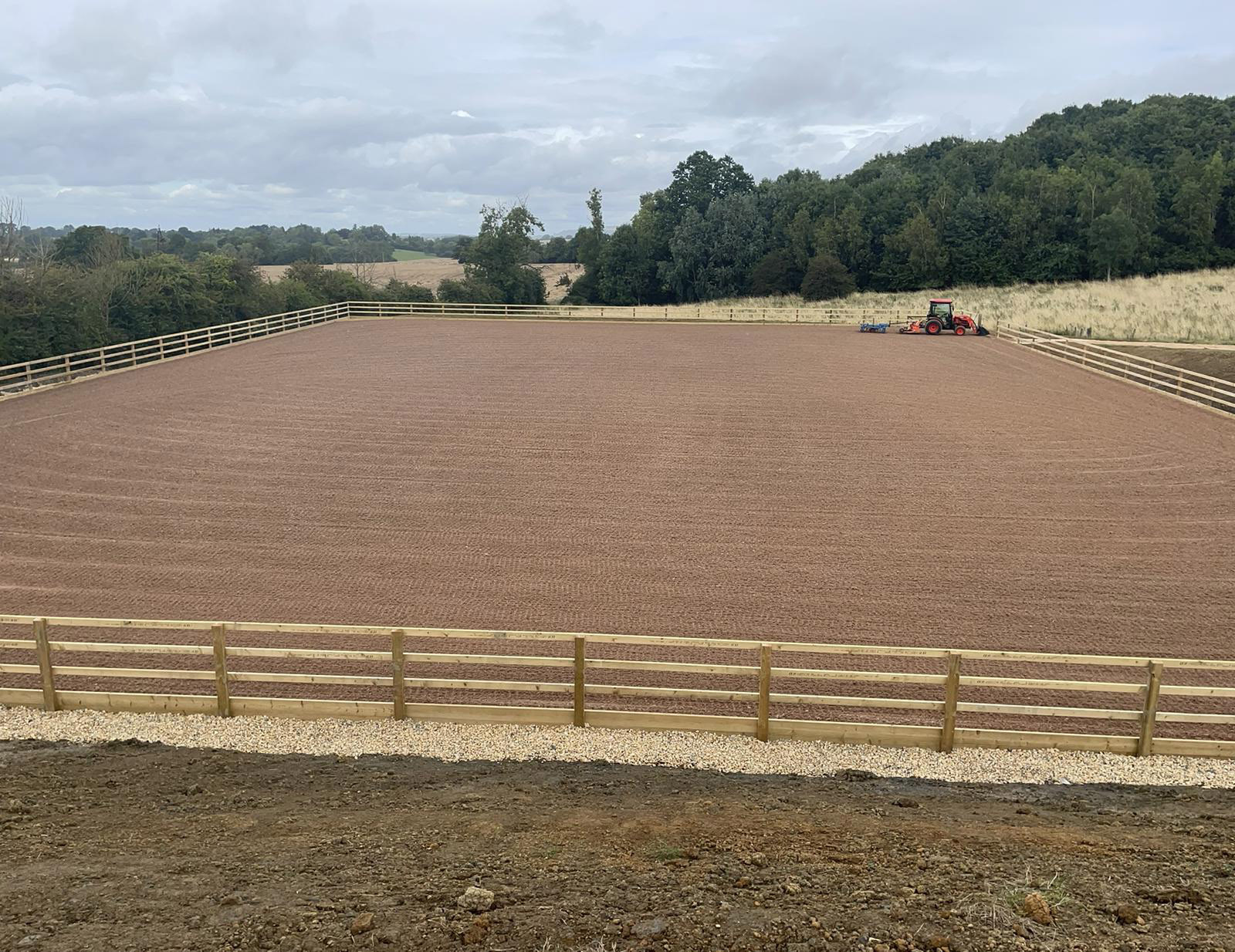
Creating the Perfect Surface: Science, Structure and Soundness
Designing the ideal riding arena surface isn’t just about choosing sand or fibre. It’s a science-led process that blends biomechanics, material engineering and expert arena construction. When each layer works together, the resulting equestrian arena footing supports soundness, enhances performance and gives riders complete confidence in every stride.
At Combi-Ride, we’ve spent decades studying how the science of footing interacts with this process. This guide brings together that expertise to help you understand what really goes into creating the perfect equestrian surface.
The Science Behind Equestrian Arena Footing
Every riding arena surface must support three essential phases of the horse’s interaction with the surface:
Landing – Shock Absorption
A well-engineered footing reduces concussion. Too firm increases joint stress; too soft creates instability and fatigue.
Mid-stance – Stability
The hoof needs a supportive, level platform. Poorly maintained or low-quality equestrian footing causes twist, strain and imbalance.
Take-off – Energy Return
A surface must offer controlled rebound, essential for show jumping, general schooling and especially dressage arena footing, where precision of movement is everything.
High-performance arena surfacing is engineered to optimise these mechanics. This is why choosing the right surface dramatically affects performance and long-term soundness.
Arena Construction and Foundations
Even the best equestrian surface cannot perform without properly engineered arena construction underneath it. A professional build includes:
A Precision-Graded Base
Provides strength and ensures even load distribution.
Efficient Drainage Layers
Critical in the UK climate to prevent waterlogging, deep spots and shifting surfaces.
A Purpose-Built Top Layer
Whether sand and fibre or a premixed performance blend, the riding arena surface must match your discipline and usage.
A poor base leads to many of the issues riders commonly experience: deep footing, pooling water, inconsistent going or compacted tracks. Combi-Ride specialises in both new arena construction and upgrading tired surfaces to restore consistency and ride quality.
Choosing the Right Riding Arena Surface
Different equestrian disciplines place different demands on footing:
- Dressage arena footing: needs grip, firmness and precise support for collected work
- Show jumping surfaces: require excellent shock absorption on landing and energy return for take-off
- All-round riding arenas: need balanced properties for variety and safety
- Racehorse training: Relies on high consistency with minimal variance in depth
There is no one ‘best’ surface, only the best surface for your arena, climate and workload. This is why Combi-Ride offers tailored advice and multiple arena surfacing options.
Understanding the Materials
Silica Sand
The structural backbone of most equestrian arena footings. Quality and particle grading determine stability, grip and moisture retention.
Stabilising Fibre
Improves structure, binds sand, reduces tracking and provides the supportive “rooting” needed for stability. Fibre is especially valuable in dressage arena footing where lateral control matters.
Premixed products ensure consistent ratios of sand and fibre, making them an increasingly popular choice for riders seeking reliable, ready-to-use arena surfacing.
Importance of Water for Arena Surfacing
Water content controls cushioning, grip, firmness and dust levels. If your surface is too wet, your arena will run deep, causing it to become unstable. If it is too dry, your surface will be too loose and shift.
Fibre blends perform better across weather extremes, but all surfaces benefit from proper moisture maintenance, especially in summer, prolonged wet periods and during freeze-thaw cycles.
Respiratory Health and Dust Control in Riding Arenas
Dust is one of the most significant respiratory risks for horses working in dry or poorly maintained arenas. When arena surfaces lack adequate moisture, fine particles become airborne during riding, leading to coughing, nasal irritation and reduced airflow to the lungs. Repeated exposure to dusty conditions can contribute to inflammation of the airways and may exacerbate respiratory conditions such as equine asthma.
Proper watering of arena surfaces helps bind dust particles together, preventing them from becoming airborne and reducing the amount of dust inhaled by both horses and riders. Maintaining correct moisture levels supports clearer air quality, allowing horses to breathe more easily during exercise. This is particularly important during periods of increased workload or warmer weather, when respiratory demand is higher. By prioritising consistent arena watering, yard owners can help protect long-term respiratory health, improve comfort and support overall performance.
Maintaining Your Riding Arena Surface Year-Round
Even a premium equestrian arena footing requires ongoing care. Good maintenance protects the base, extends lifespan and ensures a consistent feel.
Routine Arena Maintenance
- Regular levelling and harrowing
- Checking tracks and high-traffic zones
- Raking kickboards and corners
- Monitoring moisture
Seasonal Arena Maintenance
- Winter preparation – levelling, moisture balance and drainage checks
- Spring conditioning
- Summer watering and dust management
- Autumn leaf/organic debris removal
Top-ups and Upgrades for your Arena Surfacing
Surface materials naturally break down. Signs your surface needs attention:
- Deep or inconsistent areas
- Visible fibre breakdown
- Slippery or overly firm patches
- Dust increasing despite watering
At Combi-Ride, we can rejuvenate your surfaces through re-levelling or material addition, avoiding the cost of a full replacement.
Identifying Problems Before They Become Safety Risks
Poorly maintained or low-quality arena surfacing is a silent welfare threat. Warning signs include:
- Hoof prints going too deep
- Tracking that doesn’t settle
- ‘Dead’ sports or compacted areas
- Water pooling in specific zones
- Horses slipping or losing confidence
The right riding arena surface should support consistent, predictable footing in all weather. If yours doesn’t, contact us for an expert assessment.
Why a High-Quality Equestrian Arena Footing Is Worth the Investment
A well-designed surface improves:
- Movement quality
- Rider confidence
- Training outcomes
- Horse welfare
- Long-term arena value
Premium materials combined with expert arena construction create a footing that performs beautifully, protects your horse’s limbs and lasts for years.
With decades of innovation in sand, fibre and premixed surfaces, Combi-Ride helps riders build arenas that deliver consistency, comfort and true longevity.
The Formula for the Perfect Riding Arena Surface
The ideal arena blends science, precision construction and ongoing maintenance. When all three align, the result is a surface that enhances performance and protects your horse’s long-term soundness.
Whether you need a new build, a full upgrade or a smart restoration, Combi-Ride provides reliable expertise and premium arena surfacing solutions for riders who want the best footing possible.
Ready to create your perfect riding arena surface? Speak to the experts at Combi-Ride and start building a safer, smarter arena today.